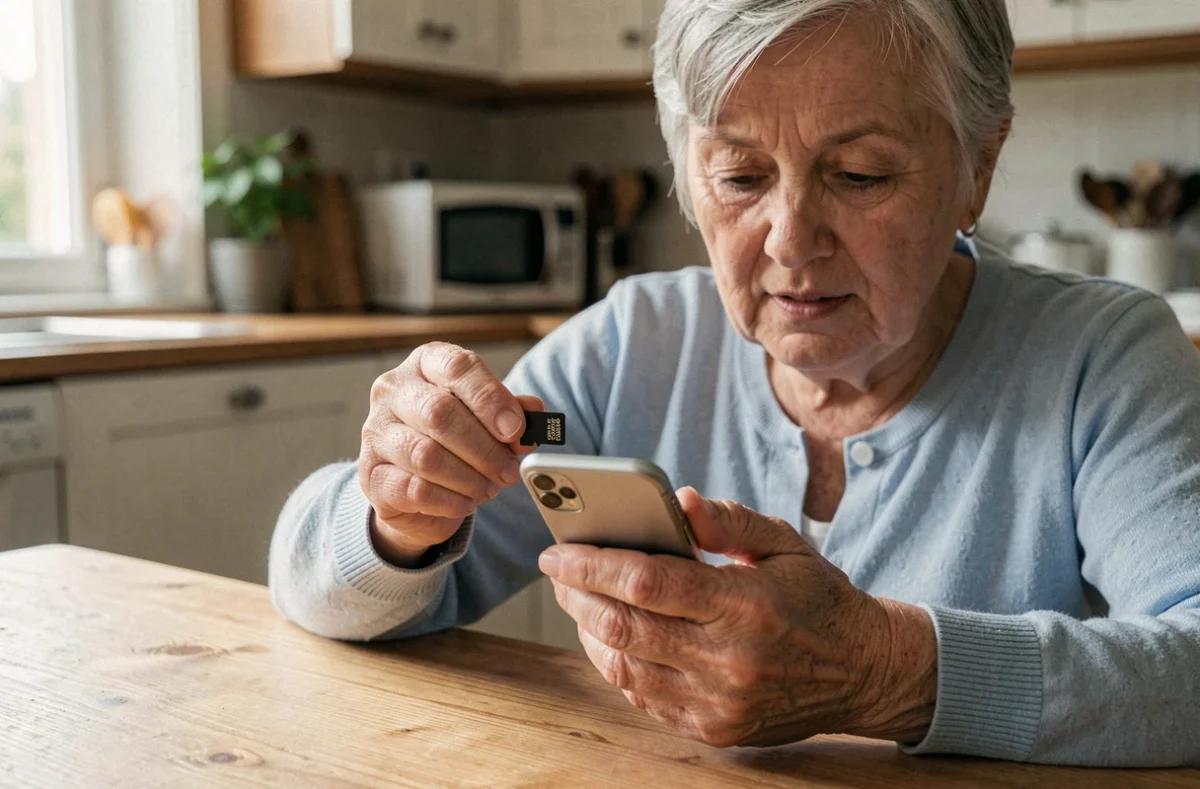
Doro phones are designed to simplify mobile usage, but adding a memory card remains a process that raises practical questions. Depending on the model, the location of the SD card, the type accepted, and the maximum capacity vary significantly. Understanding these differences before opening the compartment avoids mistakes that can lead to file corruption.
Hybrid or dedicated slot: what changes depending on the Doro model
On older flip Doro models (Doro 1360, Doro 2404), the SD card compartment is separate from the SIM card slot. The user removes the battery, locates a separate slot, and slides the microSD card in with the contacts facing down. The procedure is straightforward, with no choices to make.
Recent models like the Doro Aurora A30 operate differently. The technical sheet published by Andote on September 12, 2026, indicates a hybrid slot. This term means that the drawer accommodates either a second SIM card or a memory card, but not both simultaneously. A user who needs two active numbers will have to forgo storage expansion, or vice versa.
The procedure detailed by gestea-senior assistance on Espace Senior covers compatibility and the specific steps for each generation of Doro phone, helping to identify the correct action for their device.
MicroSD card on Doro phone: compatibility and file format
The question is not limited to the physical size of the card. All recent Doro models use the micro format, but the accepted standard varies.
- Older models (Doro 1360, Doro 2404) generally accept microSD and microSDHC cards, with a maximum capacity often limited to a few tens of gigabytes.
- The Doro Aurora A30 is compatible with microSD, microSDHC, and microSDXC cards up to 1 TB, according to the Andote sheet.
- High-capacity microSDXC cards are typically formatted in exFAT. The UpTechNet guide, updated on October 2, 2026, emphasizes that this file format can pose a compatibility issue on some older devices that only handle FAT32.
Inserting a microSDXC card into a Doro that only recognizes FAT32 can result in an error message or an undetected card. Formatting the card to FAT32 from a computer sometimes resolves the issue, but the usable capacity will then be limited.
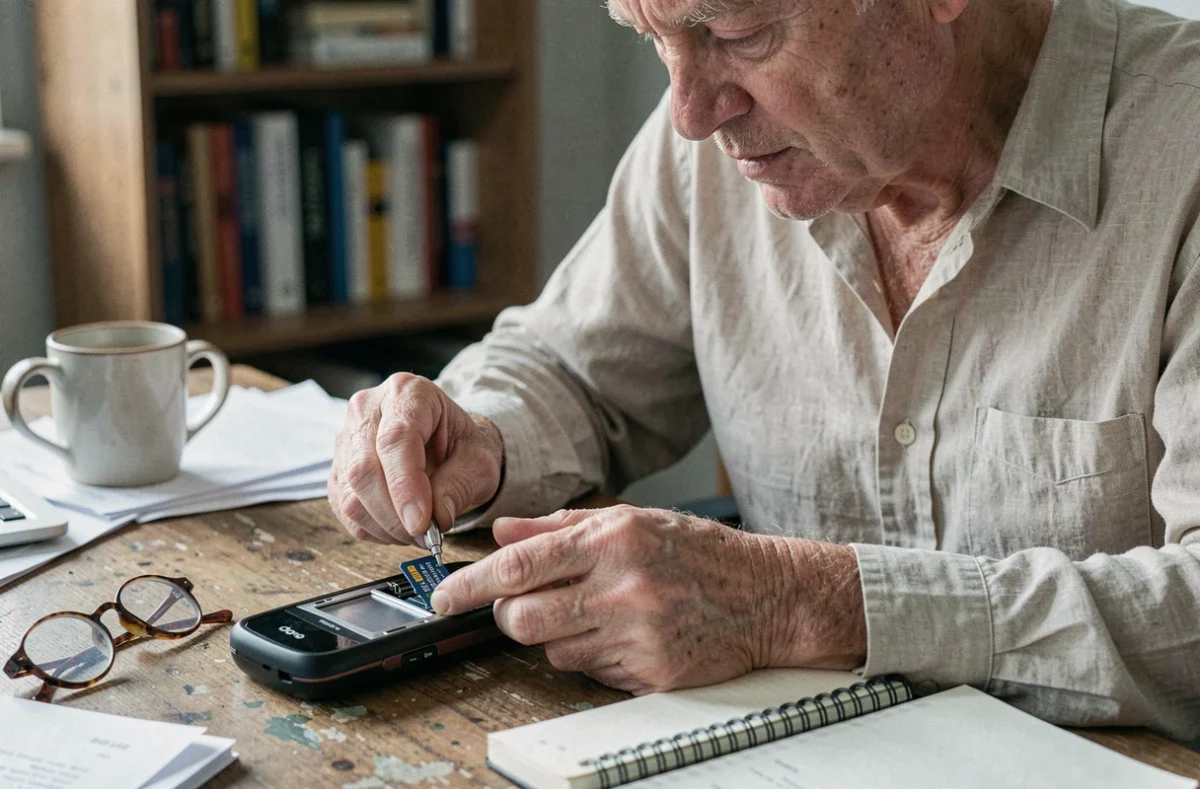
Physical handling of the SD card on a flip Doro
On flip models like the Doro 2404, the sequence remains the same from one device to another. Turn off the phone before any handling. Doro’s official documentation emphasizes this point to avoid data corruption.
Remove the back cover by sliding it off, then take out the battery. The SD card compartment is usually located next to the SIM slots. Slide the microSD card into its slot, metal contacts facing down. Replace the battery and then the cover by pressing until it clicks.
A detail often overlooked: the printed circuits on the card should not be touched with fingers or scratched. The documentation for the Doro 1360 explicitly states this risk. Using the card by its edges remains the best practice.
On Doro smartphones with a side drawer
Recent Doro smartphones (like the Aurora A30) use a removable drawer on the side. A thin ejector (provided in the box or replaced with a unfolded paperclip) is needed to open the drawer. The microSD card is placed flat in the designated slot, next to the nano SIM or in its place if the slot is hybrid.
Carefully replace the drawer without forcing it. The phone detects the card upon restart or immediately, depending on the model.
Using the SD card daily: storing photos and files
Once the card is inserted, the Doro phone usually offers to use it as storage space for photos, videos, and sometimes music. On flip models, the transfer is done via the Settings menu, under Storage or Memory.
On Doro smartphones running Android, the camera settings often allow choosing the SD card as the default location for new photos. This option can be found in the settings of the Camera app.
However, installing applications on the SD card is rarely available on recent smartphones. Perplexity data confirms that this limitation depends on the phone’s software and not the card itself. Applications remain on internal memory; only media files can migrate.
Removing the card and precautions against data loss
Removing the card without precautions can lead to corruption of stored files. Recommendations published by Kadis on September 19, 2026, suggest two actions:
- Ensure that the card is no longer in use by an application before removing it (on smartphones, go to Settings > Storage > Unmount SD card).
- Back up files to a computer or online service before any formatting, as formatting erases all data with no simple recovery option.
- On flip Doro models, turning off the phone before physically removing the card remains the safest method.
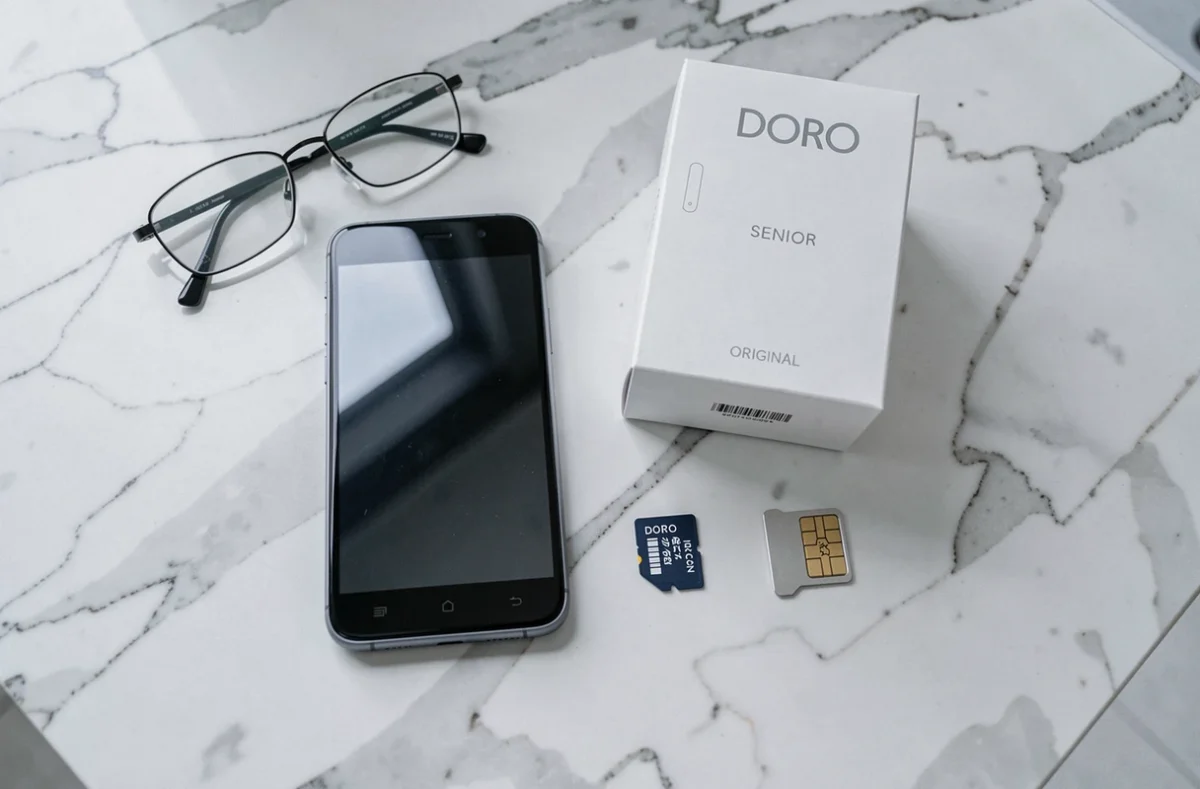
The choice of an SD card for a Doro phone primarily depends on the exact model and intended use. A flip Doro intended for calls and SMS does not have the same needs as an Aurora A30 smartphone used for photography. Checking the accepted standard (microSDHC or microSDXC) and the type of slot (dedicated or hybrid) before purchasing the card remains the most useful action to avoid incompatibility.