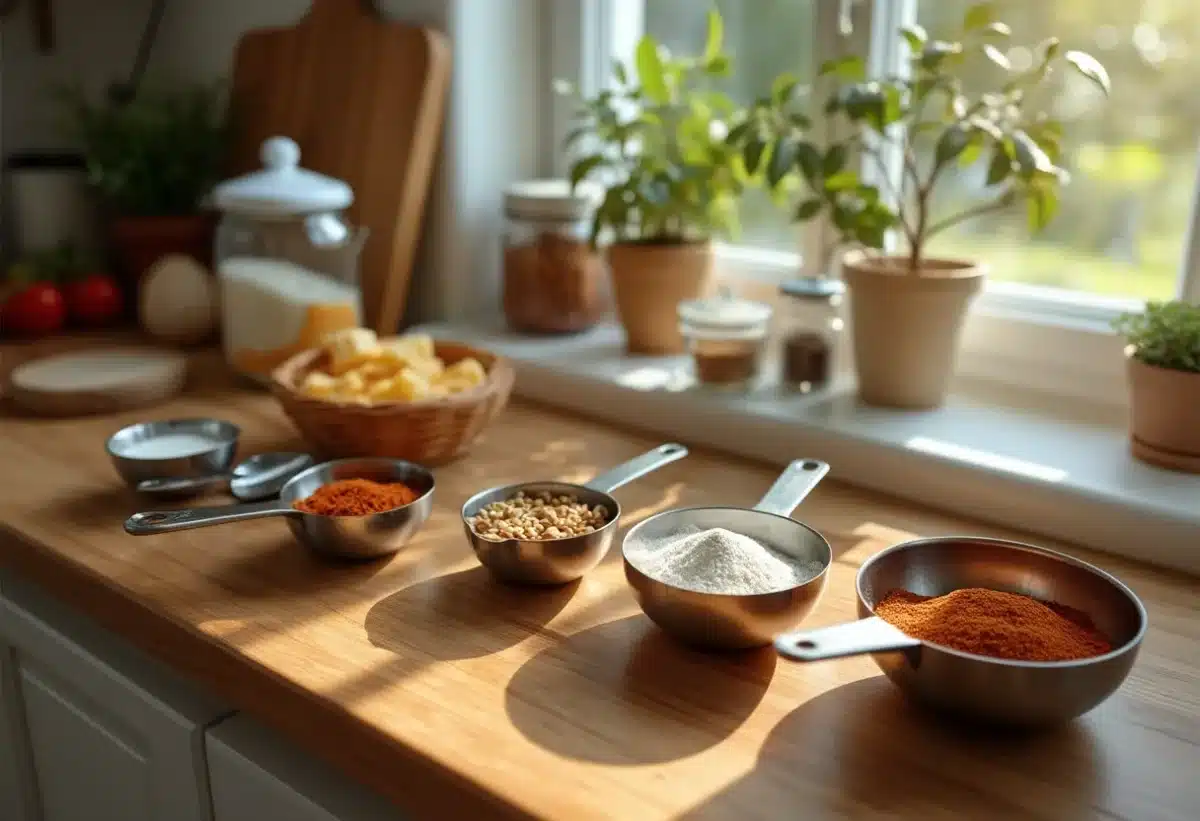
Every cook, whether amateur or professional, faces the need to convert volumes. Whether it’s to adjust a recipe for a larger or smaller portion, or to adapt Anglo-Saxon measurements to metric measurements, conversions are ubiquitous.
Among the most common conversions are those from milliliters to cups, liters to pints, and tablespoons to teaspoons. Knowing that a cup is approximately 240 milliliters or that a tablespoon is about 15 milliliters can be extremely handy. It is often in these details that the secret of successful dishes lies.
Liquid volume conversions in cooking
Cooking often requires juggling between different units of measurement, especially for liquid volumes. The metric system, used in most countries, includes units such as milliliters, centiliters, deciliters, and liters. The imperial system, primarily used in the United States, favors units like cups, tablespoons, and teaspoons.
Liquid measurement equivalence tables
- 1 liter = 100 centiliters = 1000 milliliters
- 1 deciliter = 10 centiliters = 100 milliliters
- 1 centiliter = 10 milliliters
- 1 cup (US) ≈ 240 milliliters
- 1 tablespoon (US) ≈ 15 milliliters
- 1 teaspoon (US) ≈ 5 milliliters
Measuring tools such as measuring cups and spoons are essential for achieving accurate conversions. Use them to measure ingredients precisely, especially for recipes that require strict proportions.
Converting between systems can be complex, especially when it comes to specific quantities. For example, to convert 400 milliliters to centiliters, you simply divide by 10, resulting in 40 centiliters. This apparent simplicity often hides pitfalls, especially for novices. Hence the importance of having conversion tables at hand.
For precision to the tenth, online automatic converters are valuable tools. They allow you to convert data entered in the appropriate fields with increased accuracy, thus avoiding approximations.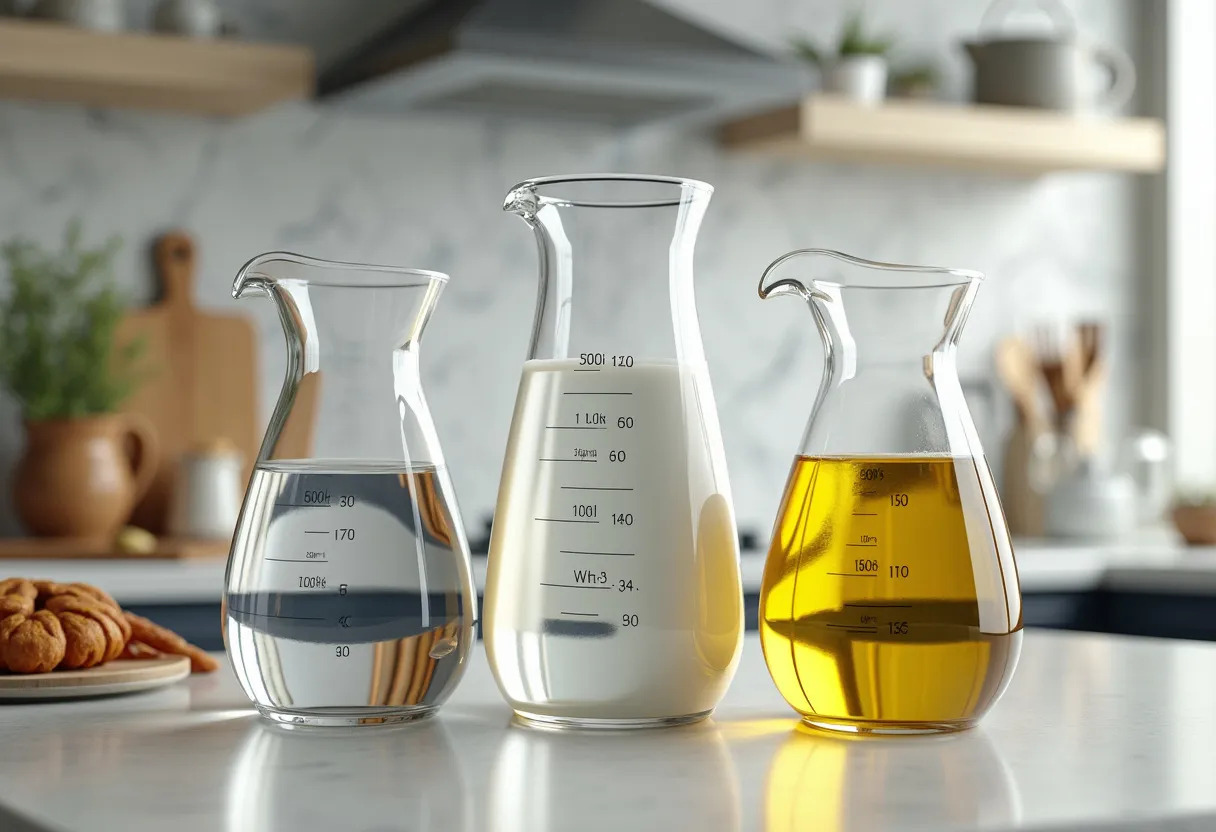
Solid volume conversions in cooking
Converting solid volumes in cooking requires a fine understanding of the equivalences between the metric and imperial systems. In cooking, solid ingredients like flour, sugar, or cocoa must be measured accurately to ensure the success of recipes. Use kitchen scales to weigh these ingredients, as they offer greater precision.
Weight measurement equivalence tables
- 1 kilogram = 1000 grams
- 1 gram = 0.001 kilograms
- 1 cup (US) of flour ≈ 120 grams
- 1 cup (US) of sugar ≈ 200 grams
- 1 tablespoon (US) of cocoa ≈ 15 grams
Measuring tools such as measuring spoons are also essential for small quantities. For example, a tablespoon of salt or baking powder must be measured precisely to avoid throwing off the recipe.
Converting common ingredients
To convert ingredients like flour, use a conversion table. For example, to convert 200 grams of flour to cups, divide by 120 grams (the weight of a cup of flour), resulting in approximately 1.67 cups. This method applies to various solid ingredients.
Kitchen scales allow for increased precision, especially for larger quantities. They are indispensable for ingredients like butter or fresh cream, often used in baking. Recipes requiring rigor greatly benefit from these tools, ensuring consistency in culinary results.