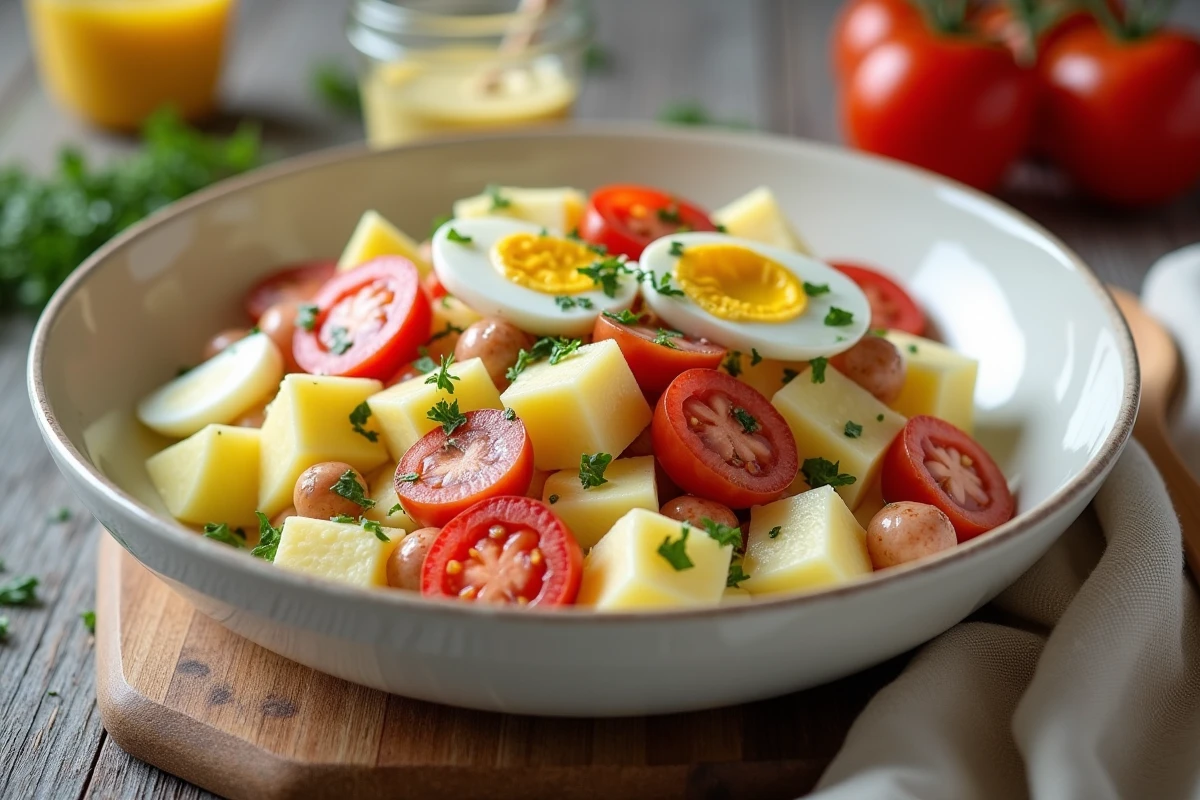
We prepare a container of Piemontese salad for Sunday’s picnic, we help ourselves again because it’s fresh, and on Monday morning the scale shows an unexpected number. The situation is common. The problem doesn’t come from the salad itself, but from what we put in it, in what quantity, and especially from how we eat it throughout the day.
Chilled potato and resistant starch: how temperature changes things
Competitors all talk about raw calories. They overlook a mechanism that changes the game: the resistant starch formed during cooling.
A cooked potato that is then cooled, as is the case in a Piemontese salad, contains more resistant starch than the same potato consumed hot. This type of starch is only partially digested by the body. The glycemic and insulin response is lower, which reduces the storage signal sent to fat cells.
In practice, we obtain a dish whose metabolic effect is more favorable than its caloric label suggests. Feedback varies on this point depending on the cooling duration and potato variety, but the principle is validated by research on glycemic load.
To better understand the link between calories and weight gain with Piemontese salad, one must look beyond simple calorie counting and consider the quality of carbohydrates present on the plate.

Homemade or industrial Piemontese salad: a concrete caloric gap
When buying a container at the supermarket, the portion often weighs around 300 g. With about 138 kcal per 100 g according to current nutritional data, it easily reaches the high end of a single meal. French recommendations on prepared dishes converge towards a ceiling of about 500 kcal per portion to remain within a balanced meal, and many industrial Piemontese salads flirt with this ceiling.
The homemade version allows for control over three direct levers:
- The amount of mayonnaise, responsible for most of the fats. Replacing half with cottage cheese or Greek yogurt halves the added fats without removing the creamy binder.
- The ratio of potatoes to vegetables. Increasing the share of tomatoes, pickles, or green beans lowers the caloric density while maintaining the volume on the plate.
- The choice of ham. A lean, trimmed ham provides protein with very little fat, whereas some industrial versions use fattier cold cuts.
By adjusting these three parameters, we shift from a dish with a “caloric complete meal” profile to a much lighter starter or side dish.
Protein profile and satiety: Piemontese salad versus composed salads
The revamped versions circulating on social media and in some weight loss programs show profiles close to 380 to 520 kcal per portion, but with a higher protein density (about 30 g of protein). This rebalancing significantly changes satiety.
A traditional Piemontese salad rich in mayonnaise provides a lot of fats for relatively few proteins. You get hungry faster, and often compensate with bread or dessert. A protein-enriched version keeps hunger at bay longer and makes it less likely to have a caloric excess for the rest of the day.
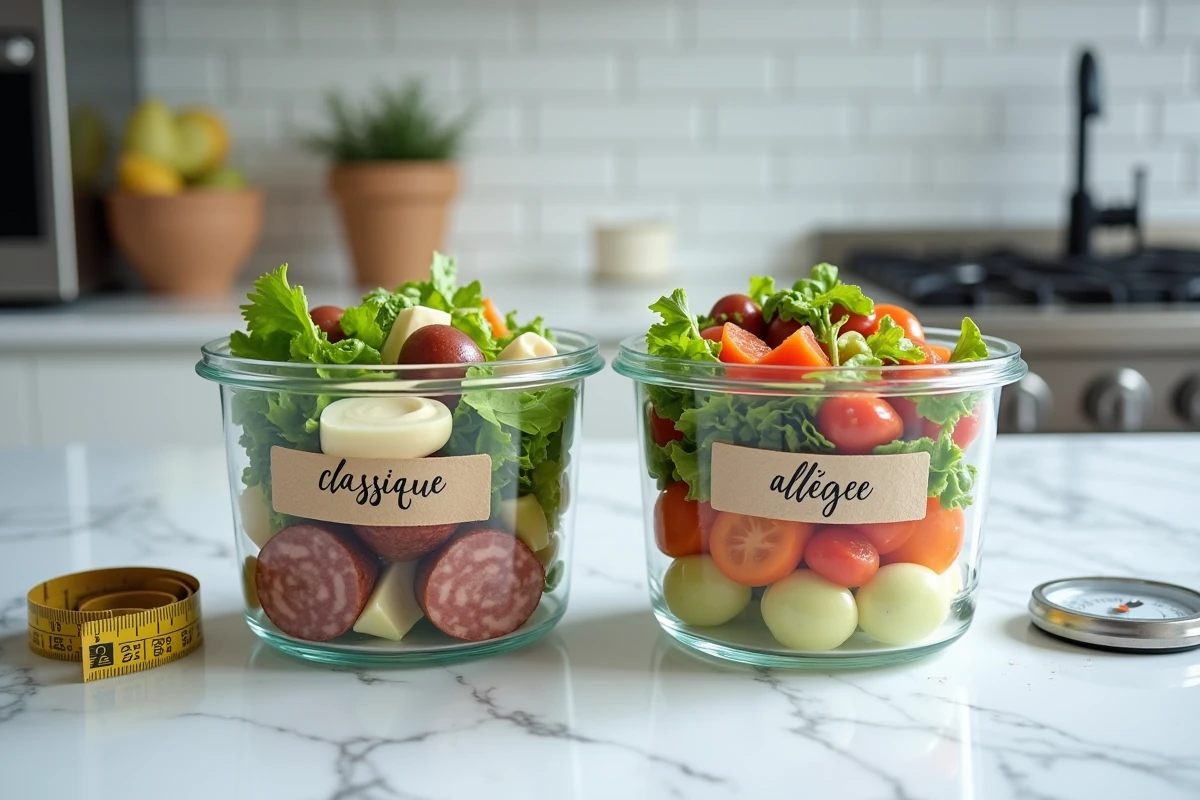
Quick comparison: classic Piemontese and lighter version
| Criterion | Classic version (100 g) | Lighter version (100 g) |
|---|---|---|
| Calories | About 138 kcal | Significantly less |
| Fats | High (mayonnaise) | Reduced (yogurt, mustard) |
| Proteins | Moderate | Higher (lean ham, egg) |
| Satiety | Average | Superior |
The table shows that at equal volume, the lighter version offers a better satiety/calories ratio. We are not talking about dieting, but about a recipe adjustment that modifies the body’s response.
Weight gain and Piemontese salad: the real factor is frequency
An isolated dish does not cause weight gain. Weight gain results from a repeated caloric surplus over several weeks. Eating a generous Piemontese salad on a summer Sunday has no measurable impact on body composition.
The problem arises when Piemontese salad becomes a default meal, bought in containers several times a week, without adjusting the rest of the diet. In this case, the fats from the mayonnaise accumulate and the caloric surplus becomes chronic.
To incorporate this dish without imbalance, one can follow a few simple guidelines:
- Limit the portion to about 200 g when Piemontese salad is served as the main dish, and complement it with a green salad.
- Prefer the homemade version with lighter dressing at least once every two times.
- Compensate for adjacent meals by reducing added fats at dinner if lunch was a hearty Piemontese salad.
Considering Piemontese salad as a “forbidden” dish would be counterproductive. A food that brings pleasure, consumed at a reasonable frequency and in a controlled portion, fits into any balanced dietary framework. Weight gain never comes from a single dish, but from an overall and lasting imbalance between intake and expenditure.