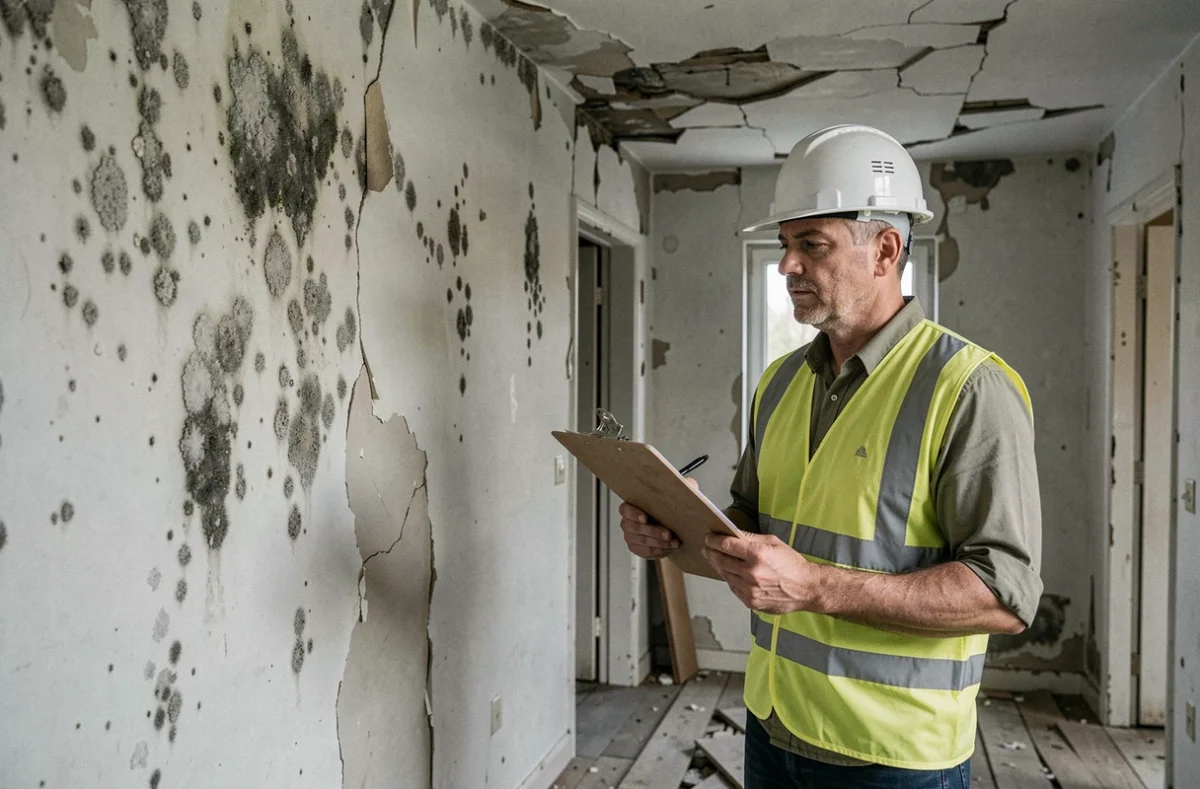
Proving that a house is uninhabitable is not just about photographing cracks or a damp ceiling. The tax administration, the prefect, and the judge do not use the same analysis criteria, and the acceptable evidence varies depending on the pursued objective: exemption from vacant housing tax, declaration of unhealthiness, or rental compliance. Identifying the correct procedure before compiling a file avoids months of unnecessary steps.
Three procedures, three reference frameworks: comparative table
Depending on whether the owner seeks a tax reduction, a tenant reports a danger, or a community initiates a peril procedure, the criteria and contacts differ. The table below summarizes the distinctions based on the current texts.
| Objective | Competent Authority | Main Criteria | Burden of Proof |
|---|---|---|---|
| Exemption TLV / THLV (taxes) | Personal tax service | Housing that can only be made habitable at the cost of significant work, vacancy independent of the owner’s will | Owner |
| Declaration of unhealthiness | Prefect, via the ARS or the SCHS | Risks to the health and safety of occupants (structure, humidity, lead, ventilation) | Administration after reporting |
| Non-decent rental | Judge of the protection litigation | Minimum surface area, equipment, safety, energy performance (DPE) | Tenant or accredited organization |
This distinction explains why the same housing can be deemed uninhabitable from a tax perspective while not having been subject to any prefectural order. You will find information on Public Immo that details the fiscal dimension of this process.
Energy performance and DPE threshold: the recent criterion that files overlook
The Climate and Resilience law introduced a criterion of rental uninhabitability that does not rely on structural condition or classic health standards. Since the decree of August 18, 2023, a dwelling whose consumption exceeds 450 kWh/m²/year is considered non-decent and can no longer be rented as a primary residence.
As of January 1, 2025, all housing classified as G in the DPE will be considered non-decent. Class F will follow in 2028, and then E in 2034.
For an owner wishing to prove the uninhabitable nature of their property to the tax authorities, a DPE classified as G constitutes a strong complementary piece of evidence. It documents a measurable deficiency of the building without requiring heavy expertise. However, the DPE alone is not sufficient to obtain a declaration of unhealthiness, which requires the identification of direct health risks.
Linking DPE and technical report
A certified diagnostician produces the DPE. But for a tax or judicial file, this document is better accompanied by a technical report describing the causes of poor performance: absent insulation, faulty joinery, non-functional heating system. The DPE quantifies the problem, the technical report identifies its origin.
Tax file: proving to the tax authorities that a house is uninhabitable
The tax on vacant housing affects unoccupied properties in tight areas. The administration accepts the exemption when the housing can only be made habitable at a cost that exceeds a significant proportion of the property’s value. The burden of proof rests entirely on the owner.
Acceptable documents by the tax service
Vague arguments (“the house is in poor condition”) or simple photos are not enough. The file must contain documents that objectify the state of the property and the cost of its restoration.
- Detailed quotes from companies for the work needed to restore habitability (structural work, roofing, networks), dated and itemized
- Report from an expert or architect noting structural disorders, absence of sanitary equipment, or danger to safety
- DPE confirming a class G or a consumption exceeding the regulatory threshold
- Insurance certificate refusing coverage of the property due to its condition, or a report of non-repairable damage
- Declaration of unoccupancy made on the “Real Estate” section of the public finances website, with the reason “uninhabitable premises”
The online declaration on impots.gouv.fr allows you to report an unoccupied property while specifying the reason for the vacancy. The process explicitly offers the option “unhealthy housing” and asks for the start date of the unoccupancy. This declaration triggers a review of the file, but does not automatically recognize the uninhabitable nature.
Declaration of unhealthiness: the prefectural procedure and its steps
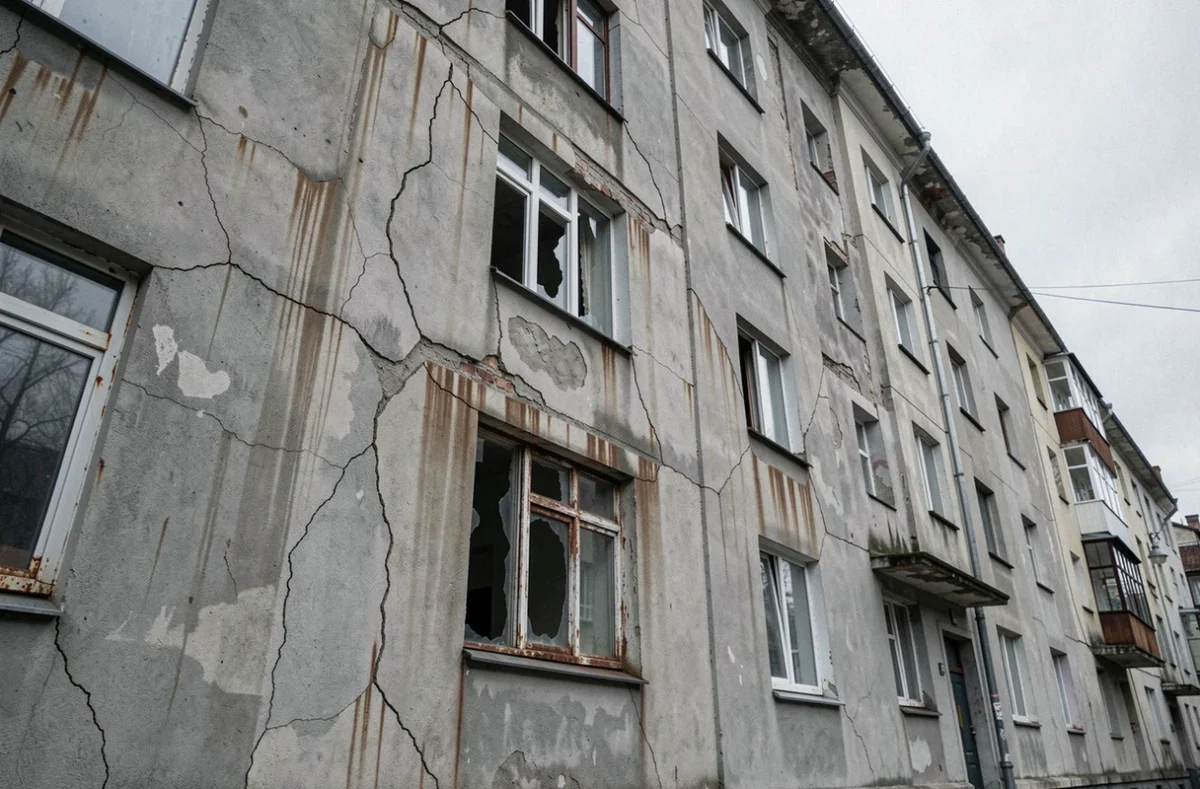
Anyone (tenant, neighbor, association) can report a situation of unhealthiness to the prefect, including via the online service Signal Logement. The report triggers a visit by the ARS or the municipal hygiene and health service.
Visits are regulated: they can only take place between 6 a.m. and 9 p.m. If the occupant or owner refuses access, the judge of liberties and detention can authorize entry into the premises.
From the report to the Coderst
The situation report established by the ARS or the SCHS is sent to the Departmental Council for the Environment and Health and Technological Risks (Coderst). This council issues an opinion, after which the prefect can issue a remediable or irreparable declaration of unhealthiness.
The irreparable declaration results in a permanent prohibition on habitation and, if applicable, an obligation to demolish. The remediable declaration sets a deadline for carrying out the prescribed work. In both cases, the landlord must ensure the relocation of the occupants.
Consequences on rent and property tax
A declaration of unhealthiness suspends rent payment from the date of its notification. The owner can also request a tax reduction for vacancy or non-use if the property remains unoccupied for more than three consecutive months due to the prescribed work. This reduction is requested from the property tax service, with supporting documents.
Justice commissioner report: the irrefutable proof
A report drawn up by a justice commissioner (formerly a bailiff) has a higher evidential value than photos or letters. It describes the condition of the housing room by room, with timestamps and precise locations of the disorders.
This document is admissible before the judge, before the tax administration, and in the context of a rental dispute. Its cost varies according to the area and complexity of the report, but it secures the file against a challenge.
Building a solid file involves cross-referencing several types of evidence: technical diagnosis, legal report, itemized quotes, administrative declaration. No isolated document is sufficient to convince the administration or the judge. The combination of objective documents, produced by identified professionals, remains the only approach that withstands scrutiny or litigation.